
I have spent my life studying and teaching survival, tracking, and self-reliance. Most people think those skills are about fire-starting, shelter-building, or reading a compass. They are, but the deeper truth is that survival is about discipline, resilience, and mastering yourself when conditions get tough.
Recently, I joined Joe De Sena on The Hard Way Podcast to talk about grit in the wild. Here are a few lessons I shared that can help anyone, whether you are outdoors or facing challenges in daily life.
The Hardest Survival Test
The wilderness will test you with storms, hunger, and cold. But the hardest survival test is not the environment, it is your own mind. When exhaustion sets in, your brain starts whispering lies: You cannot do this. You should quit.
That is when you discover the power of small, disciplined decisions. You do not overcome the mountain all at once, you overcome it one careful step at a time.
Takeaway: You cannot always control the storm, but you can always control your response to it.
Staying Calm When Fear Hits
Fear is natural. Panic is optional. I teach my students to treat fear as information, not an enemy.
Here is a simple process anyone can use:
-
Acknowledge it – Name the fear out loud. It disarms it.
-
Breathe – A few controlled breaths shift your physiology.
-
Act small – Focus on the next task, not the whole problem. Build a fire. Drink water. Take one step.
The wilderness taught me this truth. You do not eliminate fear, you learn to carry it well.
The Role of Suffering
Most of us spend our lives avoiding discomfort. But true self-reliance is born in discomfort. Every blister, every cold night, every empty stomach is tuition paid for resilience.
Suffering is not punishment. It is preparation. It sharpens your resourcefulness, teaches gratitude, and expands your comfort zone in ways comfort never could.
Discipline From the Woods
Nature does not negotiate. Fire either lights or it does not. You can either read the map or you cannot. The woods do not care about excuses, and that honesty has shaped my own discipline.
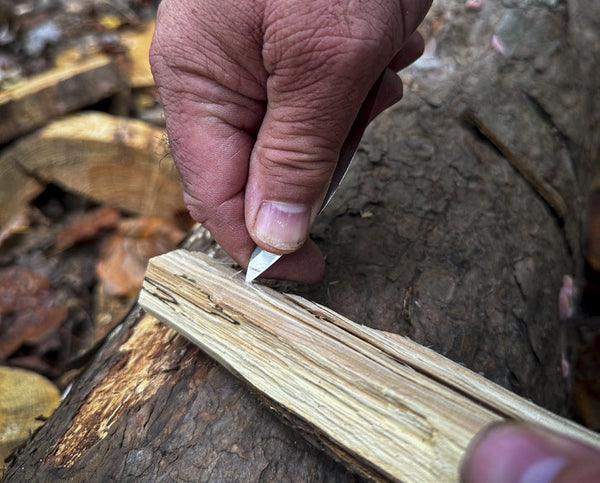
Outdoors, every little habit matters: keeping your knife sharp, staying dry, staying aware. That same discipline applies everywhere in life.
One Hard Skill Everyone Should Learn
If I had to pick one, it would be firecraft. Learning to make fire in miserable conditions is humbling and frustrating, but it teaches patience, persistence, and the difference between knowing and doing.
Other skills like tracking and navigation do the same. They make you tougher by proving you can rely on yourself when everything else fails.
How Tracking Shapes Us as People
Tracking is more than following footprints. It builds character in five powerful ways:
-
Patience – Trails rarely reveal themselves quickly.
-
Awareness – A bent blade of grass teaches you to notice what others miss.
-
Adaptability – Sign disappears, the tracker learns to find it again.
-
Humility – Every trail teaches something new, and every mistake humbles you.
-
Decision-making – Tracking forces choices when the picture is not complete.
Lesson: Tracking develops the same traits needed for good leadership and good living.
Why the Wilderness Matters
Time outdoors gives us clarity of mind, stress relief, heightened awareness, physical challenge, and a deep sense of connection.
It is the best classroom I have ever found, and its lessons go far beyond the trail.
Final Thoughts
Survival is not about the gear you carry. It is about the grit you carry. The lizard brain may want to panic, the limbic system may want to freeze, but the prefrontal cortex, your thinking brain, can override it all with training and discipline.
The wilderness is the most honest teacher I have ever met. And the lessons it gives are not just for the woods. They are for life, leadership, and resilience in every hard thing we face.